
Preamble
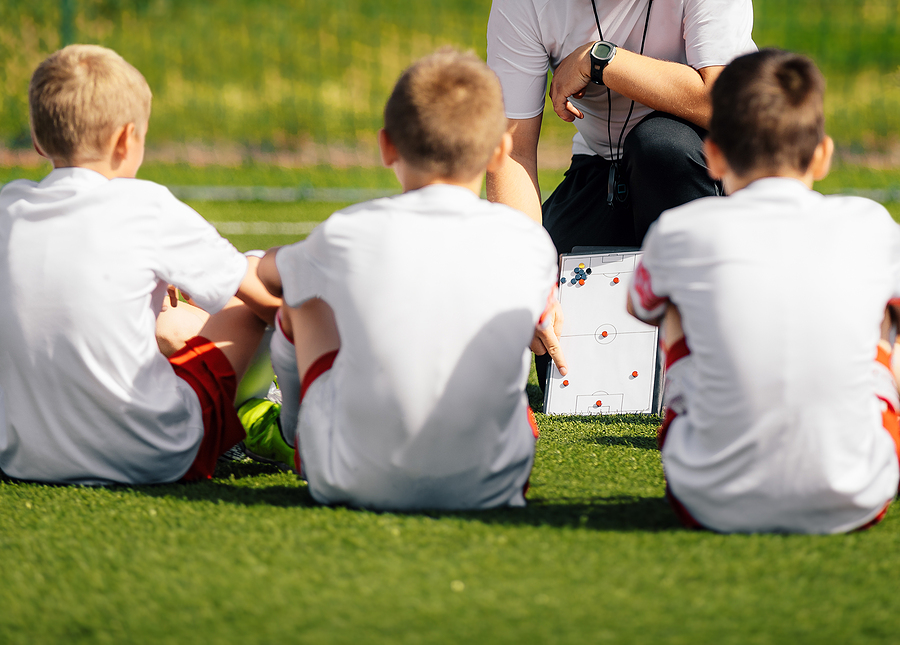
I recently volunteered to assist with the training and game management of my son’s Under 9 soccer/football team. I will likely write a whole feature article on the entire experience later (a must-read for those involved in developmental or junior competitive sports). But for now, I’m only mentioning it to provide some context for this blog on coachability.
During the first game of the season, one of the other fathers and I were chatting on the sideline. By the end of the match, we basically agreed that the team could do better. Rather than grumble from the stands we felt it appropriate for us to lend a hand. Fortunately, this offer was accepted and Coach J and Coach G (me) got to work.
As I write this we are midway through the season. So far, two of the most common words during pre and post-training sessions have been coachable and coachability. As these young seven, eight and nine-year-old boys and girls learn to deal with competitive sports for the very first time some of them are highly coachable whilst others are less so. As you would expect.
So What Exactly Is Coachability?
While researching for this article the first thing that I realised is that coachable and coachability are not actually official words yet. The Cambridge Dictionary shows up nothing when you punch them into their online search. However, it does show up in The Britannica Dictionary suggesting they are trying to officially make it into the English language.
Their definition of coachable is “capable of being easily taught and trained to do something better.”
Focus And Motivation Come First
One concept that is obvious when it comes to the range of coachability is that some of them struggle to be coachable because they lack focus. Whilst others struggle because they don’t really, really want to be there. It is mid-winter here in Australia and La Niña has made for some pretty challenging training conditions. Which of course I love.
As a practising sport psychologist, this is a timely reminder that in psychology things aren’t always as they appear. Although on the surface it appears as if we have inherited a group of soccer players whose overall coachability is not great I am confident that this is most effectively addressed by helping them with their focus or motivation or both.
And of course, this is my bread and butter. This is literally what my colleagues and I do five days a week, most weeks of the year.
Low Levels Of Coachability Are A Symptom
It is tempting to try and work out which players are struggling due to an inability to focus and which ones lack motivation but this is actually an unnecessary step. Regardless of how motivated and focused they are they can always improve. Improvement is a never-ending process. You never reach the finish line where it is no longer possible to improve.
Do I Know Too Much?
One of the challenges of being so qualified and experienced in sport psychology when assisting with your own child’s sporting team is not getting carried away. This is one of the main reasons why I insisted on doing it with somebody else. Coach J, a Scotsman, is a vital cog because not only does he have a great understanding of the sport but he also helps me to remember that these are youngsters at the very, very start of their sporting journey. They are not Premier League players. Not yet, anyway.
So the two of us have regular meetings whereby his knowledge of the technical and tactical gets mixed with my knowledge of the mental. And then we come up with a unified approach to training and games. What is apparent is how effective this is compared to the way that sport psychology is so often done.
Often the sport psychologist will come in and run a series of workshops without any involvement with the coach(es). Some professionals call this Working In Silos. Even more common is when the sport psychologist only helps with mental health issues. He or she is basically a therapist who happens to work with sporting individuals. For anyone who has watched the Ted Lasso TV series the way the work of Dr. Sharon Fieldstone is portrayed is more or less what I am referring to here.
But Back To Coachability
We need to acknowledge when coachability is an issue that it could be caused by poor coaching. Let’s be honest here. Not all coaches are equal and not all coaches are at the top of their game.
If you are reading this and you are heavily involved in the running of a sporting team where you feel like coachability is an issue then I would suggest you start with an examination of your coaching staff. Here are some questions for you to consider:
- What are the qualifications of our coaches? Do they have some kind of formal training or are they just former players or mates of one of the decision-makers?
and/or
- Are any processes in place that allow them to develop professionally? Or are they doing exactly the same this year as they were four years ago?
and/or
- Are the players given an opportunity to provide feedback about the coaches? It seems so one-sided that the coaches provide feedback to the players but rarely the other way around?
Coaching The Coaches
Once you’re happy that the coaching staff are not the primary cause of poor coachability then of course it’s time to help the players. Obviously, I am heavily biased but dispatching your coaches off to retrain as qualified sport psychologist (a six to eight-year process in most countries) is impractical and ridiculous. But what if sporting organisations give their coaches the opportunity of working alongside a sport psychologist or performance psychologist? Not because they too need therapy like Ted does in the Ted Lasso series. But because one of the most effective ways of improving the mental toughness of a sporting team is for it to come directly from the coaches who have the right mentors.
More and more of the work we do at Condor Performance is to mentor sporting coaches. Below, to finish off, I have listed of few recurring suggestions that come up over and over again in the 1-on-1 work I do with sporting coaches. If you want more, you know how to find us.
- Processes are more important than outcomes.
- Treat athletes as people first, performers second.
- It’s very difficult to help others if you are not looking after yourself first.
