
“Desire is the key to motivation, but it is determination and commitment to an unrelenting pursuit of your goal – a commitment to excellence – that will enable you to attain the success you seek.”
Mario Andretti
It’s That Time Of Year …
This New Year’s shorter-than-normal edition of the Mental Toughness Digest is an edited/updated version of an article I published exactly two years ago. Time of year should have nothing to do with various mental aspects of performance. But it tends to. One of the most significant is this. At the start of the year – now – motivation for improvement tends to be higher than at other times. Why? Most likely, the start of new periods (weeks, months, years, seasons) implies new energy and new opportunities. It shouldn’t but it does. The mentally strong can conjure this same energy at any time.
So it’s appropriate that this first article of this New Year is about motivation and commitment. About getting started, about finally closing the gap between yourself and your best self.
Committed Performance / Sport Psychologists
Since starting Condor Performance back in 2005 I have given many psychologists a chance to join our team. I don’t keep a count but I would suggest the number is close to 40 or 50. Yet only ten remain (are still working for us). What is it about my current team that separates them from the dozens that have come and gone? Only those that remain have shown a real commitment to the sport psychology work we do.
Due to the client focussed monthly options that our clients choose from, whereby our clients are encouraged to have shorter, more frequent sessions at times that suit them (not necessary us) real commitment gets tested from the get-go. Nothing questions commitment in our line of work quite like sitting in traffic for an hour to deliver a 20-minute session or getting up at 4 in the morning due to a time zone difference. The cracks tend to start appearing early for those who are not really committed to helping others improve.
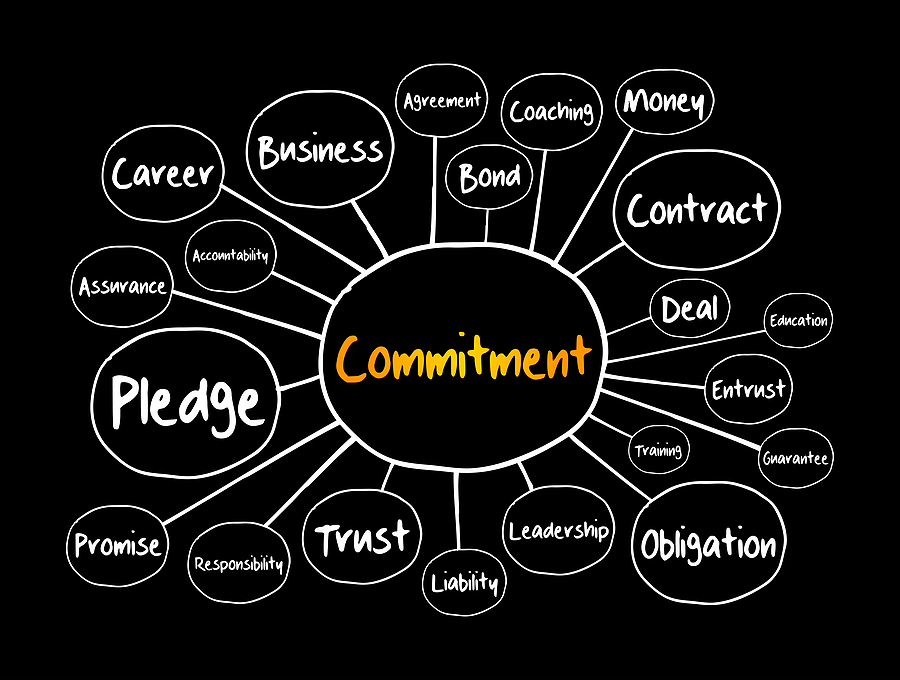
Commitment Is The Same As Motivation
Commitment is essentially a synonym of motivation. The scientific literature correctly suggests that a healthy mixture of both internal and external motivation is required to reach optimal. External factors, which refer to rewards or praise from others only get you so far. Ideally, we’d want more than half of the drive to come from internal factors. These are factors such as enjoyment, self-worth/efficacy, passion and seeing the bigger picture (short term pain but long term gain).
It’s this magical combination of internal factors being backed up by external ones that only a few have and becomes quite obvious pretty quickly. I remember once calling a staff meeting on a Sunday and the person who lived furthest away (who shall remain nameless) wasn’t very well so I gave him the option of not coming. Yet 5 minutes before the meeting was due to commence he arrived coughing and sneezing. He wanted to be there – for himself (internal) and for his colleagues (external) and didn’t see why a runny nose and a
If you’re interested in learning more about your own levels of motivation (commitment) then click here to access our four Mental Toughness Questionnaires. Once completed one of the team will be in touch with your results.
